

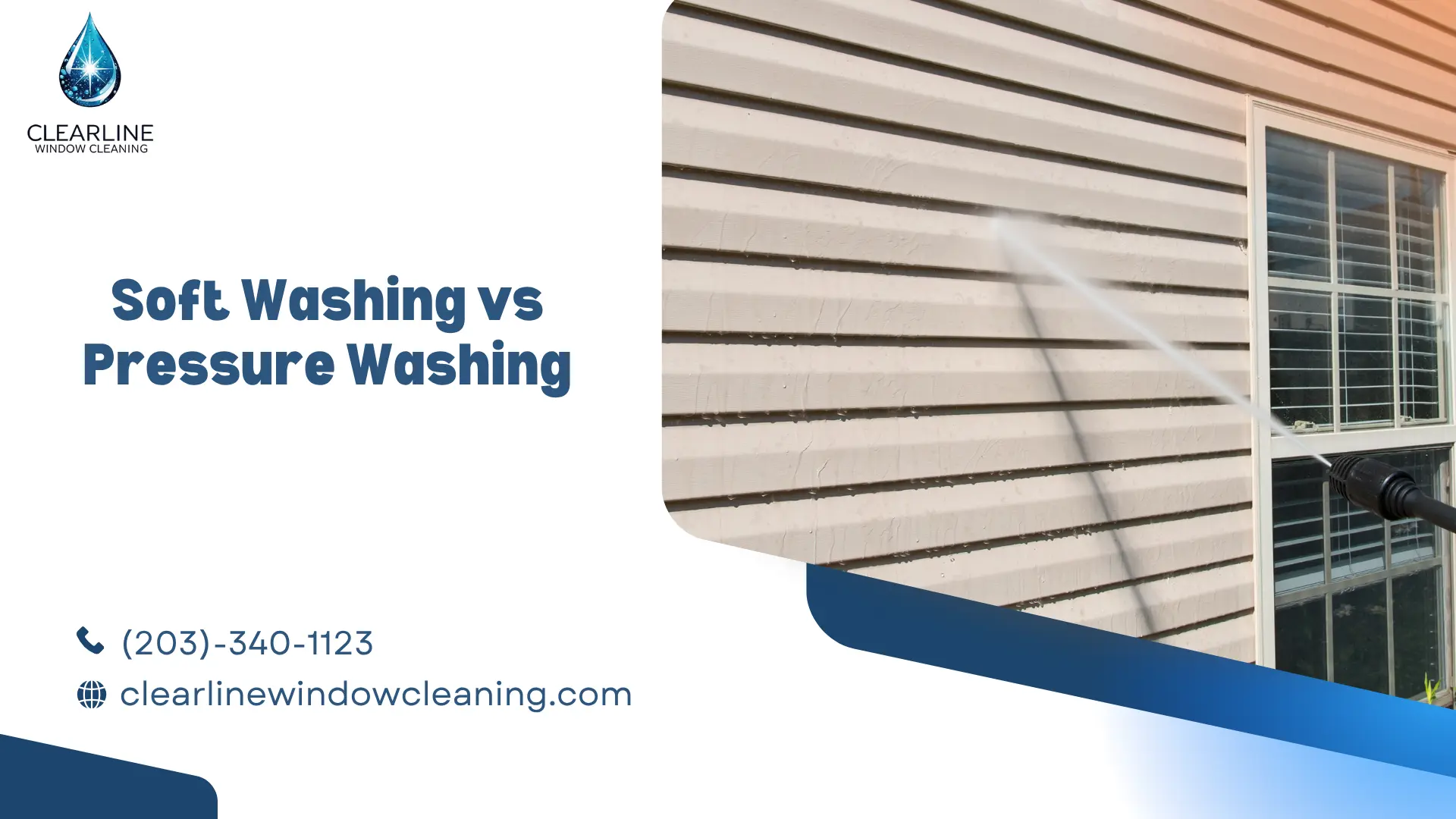
Choosing the right exterior cleaning method is essential for protecting your home while removing dirt, algae, mold, mildew, and other buildup. Two of the most common options are soft washing and pressure washing, but they are designed for different surfaces and cleaning needs.
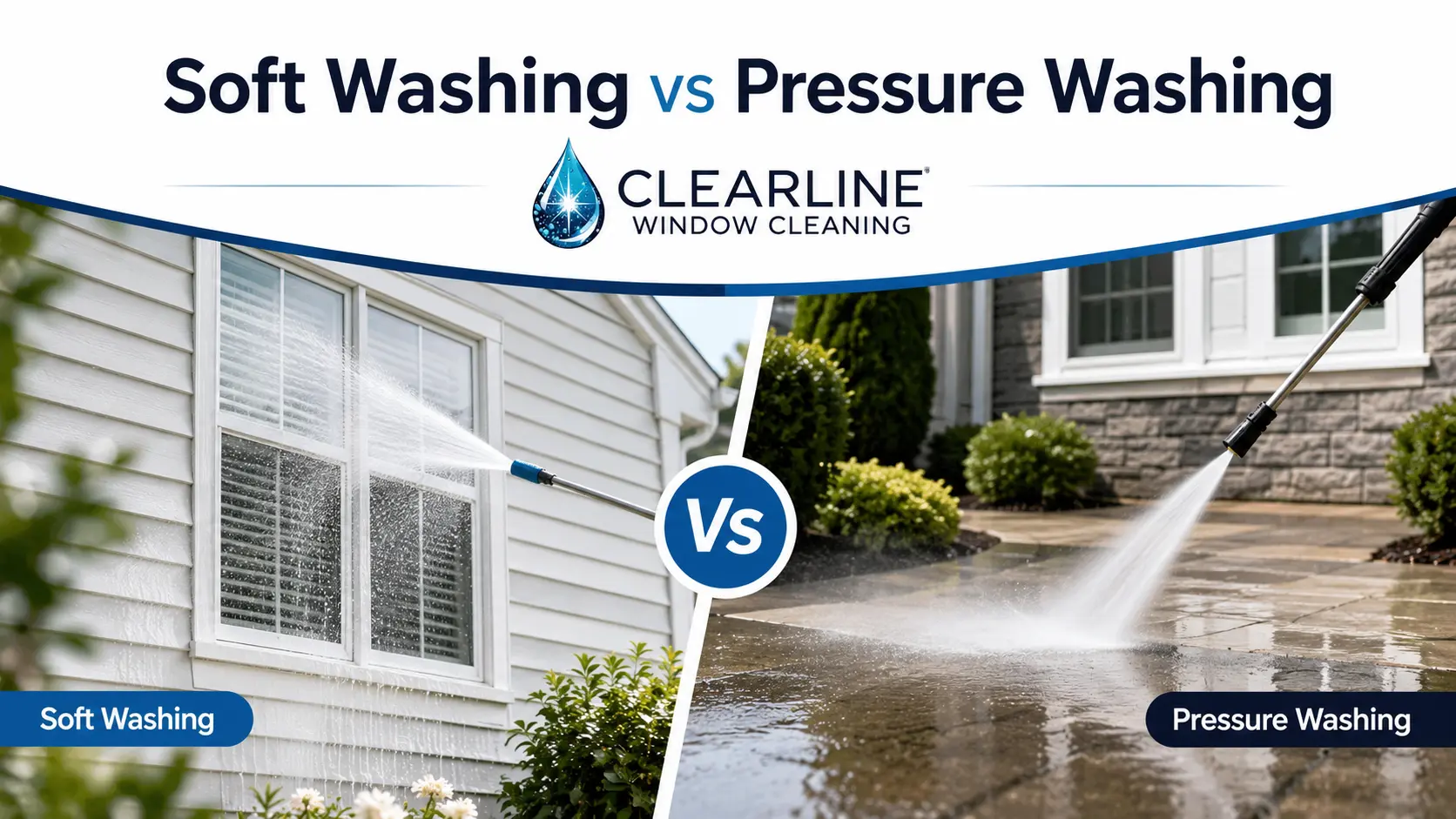
The main difference in soft washing vs pressure washing is how each method removes contamination. Soft washing uses low water pressure with specialized cleaning solutions. Pressure washing relies on stronger water pressure to loosen and remove buildup from durable exterior surfaces.
Soft washing is often the better choice for siding, roofs, stucco, and painted materials. Pressure washing is generally more suitable for concrete driveways, walkways, patios, and other hard surfaces that can withstand greater force.
Clearline Window Cleaning helps homeowners throughout Fairfield County select the right method for each part of their property. Rather than using one technique everywhere, our team considers the surface material, condition, age, staining, and surrounding areas before beginning.
Soft Washing vs Pressure Washing
Choose soft washing for delicate exterior surfaces and organic growth. Choose pressure washing for durable hard surfaces with embedded dirt and grime.
Soft washing is commonly used for:
- Vinyl and aluminum siding
- Stucco
- Painted exterior surfaces
- Roof shingles
- Soffits and fascia
- Delicate exterior trim
- Some wood surfaces
Pressure washing is commonly used for:
- Concrete driveways
- Walkways
- Patios
- Outdoor steps
- Selected brick surfaces
- Retaining walls
- Durable stone areas
- Some decks and fences
A professional inspection is important because two surfaces that look similar may require different pressure levels or cleaning treatments.
What Is Soft Washing?
Soft washing is an exterior cleaning method that uses low water pressure and carefully selected cleaning solutions. The cleaning treatment breaks down contaminants such as:
- Green algae
- Mold
- Mildew
- Moss
- Dirt
- Pollen
- Organic staining
- Bacteria-related buildup
After the solution has had enough time to work, the surface is rinsed using a gentle flow of water. Soft washing does not depend on strong pressure to force stains away. Instead, it treats the organic growth responsible for much of the visible discoloration. This makes it suitable for materials that could crack, loosen, fade, or become damaged under excessive water pressure.
What Is Pressure Washing?
Pressure washing uses pressurized water to remove dirt, mud, grime, and surface buildup from durable outdoor materials. The force of the water helps loosen contamination from textured or porous surfaces. Professional equipment allows the technician to adjust the pressure, nozzle, spray pattern, and distance according to the material.
Pressure washing may be effective for:
- Darkened concrete
- Dirty walkways
- Mud-covered patios
- Outdoor steps
- Some masonry surfaces
- Selected pool surrounds
- Durable retaining walls
- Heavily used exterior paths
Pressure washing does not mean using maximum pressure on every surface. Even concrete may become etched or permanently marked when the wrong nozzle or setting is used.
Soft Washing vs Pressure Washing: Main Differences
| Comparison | Soft Washing | Pressure Washing |
| Water pressure | Low | Moderate to high |
| Main cleaning action | Cleaning solutions treat buildup | Water pressure loosens buildup |
| Best for | Delicate surfaces | Durable hard surfaces |
| Common targets | Algae, mold, mildew, organic stains | Dirt, mud, grime, loose buildup |
| Typical surfaces | Siding, roofing, stucco, trim | Concrete, patios, walkways, steps |
| Surface risk | Lower when applied correctly | Higher when pressure is misused |
| Cleaning approach | Treat, wait, and rinse | Apply controlled water pressure |
| Professional assessment | Required | Required |
The appropriate method depends on more than how dirty the surface looks. Material strength, existing damage, coatings, age, drainage, and nearby landscaping should all be considered.
When Does Your Home Need Soft Washing?
Soft washing is generally recommended when the surface requires a gentle cleaning process or when organic growth is the primary problem.
Siding Covered With Algae
Green patches on siding are common in shaded or damp areas. The discoloration may be caused by algae rather than ordinary dirt.
Applying strong pressure may force water behind siding panels or damage loose sections. Soft washing treats the organic growth and allows the surface to be rinsed gently.
Dark Streaks on a Roof
Roof shingles should not usually be cleaned with aggressive pressure. Excessive force may loosen granules, lift shingles, or affect the roof’s expected performance.
A professional low-pressure method can treat suitable roof surfaces without relying on concentrated water force.
Mold or Mildew on Stucco
Stucco may develop organic staining in areas with limited sunlight or airflow. However, cracks, aging, or previous repairs may make the surface vulnerable to damage.
Soft washing provides a more controlled approach than high-pressure cleaning.
Painted Exterior Surfaces
Strong water pressure may remove loose paint or worsen existing peeling. A low-pressure method is often safer, although damaged paint should be evaluated before any cleaning begins.
Delicate Trim and Soffits
Trim, soffits, and fascia may contain joints, vents, painted areas, and lightweight materials. Soft washing can help clean these sections without applying unnecessary force.
When Does Your Home Need Pressure Washing?
Pressure washing is most appropriate for strong exterior materials that can tolerate controlled water pressure.
Concrete Driveways
Driveways collect tire marks, soil, leaf residue, mud, and grime. Pressure washing can remove layers of general buildup and create a cleaner, more consistent appearance.
Deep oil, rust, paint, or chemical stains may require specialized treatment and may not disappear completely.
Walkways and Outdoor Steps
Heavily used paths may become dark or develop organic buildup. Professional pressure washing can refresh the surface and improve the appearance of the entrance.
Concrete Patios
Patios are exposed to foot traffic, planters, outdoor furniture, rain, and surrounding landscaping. Pressure washing can remove dirt from textured concrete and prepare the area for seasonal use.
Selected Brick and Stone Surfaces
Some brick and stone can be pressure-washed, but the condition of the material and mortar must be considered.
Old mortar, loose joints, soft stone, and damaged masonry may require reduced pressure or another cleaning method.
Durable Retaining Walls
Retaining walls may collect soil, algae, and runoff stains. Controlled pressure can help clean suitable materials without disturbing loose components.
Which Method Is Better for House Siding?
Soft washing is usually the preferred option for house siding.
High pressure may:
- Force water behind panels
- Loosen siding
- Damage seals
- Create streaks
- Remove paint
- Affect exterior fixtures
- Push moisture into vulnerable openings
Soft washing uses a lower-pressure rinse while the cleaning treatment handles most of the contamination. However, the siding should still be inspected first. Cracks, loose panels, damaged caulking, open vents, failing paint, and electrical fixtures may affect how the service is completed.
Which Method Is Better for Roof Cleaning?
Soft washing is generally more appropriate for suitable roof surfaces. Pressure washing may be too aggressive for asphalt shingles and other delicate roofing materials. It may loosen protective granules or force water beneath the roofing system.
A professional roof cleaning process should consider:
- Roof material
- Roof age
- Existing damage
- Manufacturer recommendations
- Access conditions
- Nearby gutters
- Landscaping below
- How will runoff be controlled
Cleaning cannot repair damaged shingles, active leaks, or structural roof problems. These concerns require a qualified roofing professional.
Which Method Is Better for Concrete?
Pressure washing is often the better option for concrete because concrete is typically more durable than siding or roofing. However, improper cleaning can still cause damage. Excessive pressure, a narrow nozzle, or holding the spray too close may etch the surface and leave permanent lines. New, cracked, deteriorated, coated, or decorative concrete may need a modified approach. A professional technician should inspect the surface and adjust the equipment rather than assuming all concrete can be cleaned in the same way.
Can a Home Need Both Cleaning Methods?
Yes. Many homes benefit from a combination of soft washing and pressure washing during the same exterior cleaning project.
For example:
- Soft washing may be used on siding.
- Low-pressure treatment may be used around exterior trim.
- Pressure washing may be used on the concrete driveway.
- Controlled pressure may clean the walkway.
- A separate method may be selected for the deck.
- Professional window cleaning may be completed afterward.
Using multiple methods allows each surface to receive the most appropriate treatment.
A company that only offers one technique may try to use that method everywhere. Clearline Window Cleaning evaluates each section of the property before recommending the best approach.
Is Soft Washing Safer Than Pressure Washing?
Soft washing generally presents a lower risk of pressure-related surface damage because it uses less water pressure. However, safe soft washing still requires professional judgment. Cleaning solutions must be mixed, applied, controlled, and rinsed correctly.
The provider should consider:
- Surface material
- Existing deterioration
- Nearby plants
- Windows and doors
- Outdoor furniture
- Drainage
- Weather conditions
- Water runoff
- Children and pets
- Electrical fixtures
Pressure washing can also be safe when it is used on suitable surfaces by an experienced technician. The safest method is not automatically the one with the lowest pressure. It is the method correctly matched to the surface.
Does Soft Washing Last Longer Than Pressure Washing?
The result depends on the surface and type of contamination.
Soft washing can provide longer-lasting results for algae, mold, and mildew because the process treats organic growth rather than simply removing the visible layer.
Pressure washing may provide effective results on concrete and other hard surfaces where the main problem is accumulated dirt, mud, or grime. New buildup will eventually return because exterior surfaces remain exposed to moisture, shade, pollen, trees, vehicles, and changing weather.
Maintenance frequency may depend on the following:
- Tree coverage
- Humidity
- Shade
- Rain exposure
- Surface material
- Drainage
- Previous organic growth
- Traffic around the property
Why DIY Exterior Cleaning Can Be Risky
Rental pressure washers may appear simple to operate, but a small mistake can cause permanent damage.
Common DIY problems include:
- Using excessive pressure
- Selecting the wrong nozzle
- Cleaning too close to the surface
- Removing paint
- Etching concrete
- Splintering wood
- Damaging mortar
- Forcing water behind siding
- Leaving visible cleaning lines
- Damaging window seals
- Applying unsuitable chemicals
- Failing to protect plants
- Slipping on wet surfaces
- Falling from a ladder
Professional exterior cleaners understand how pressure, distance, cleaning solutions, surface condition, and technique work together.
Hiring a professional also eliminates the need to transport equipment, manage hoses, move heavy machinery, and clean elevated areas.
How Professionals Choose the Correct Cleaning Method
A reliable exterior cleaning company should inspect the property before beginning.
The assessment may include:
Surface Material
Vinyl siding, wood, concrete, stucco, brick, roofing, and painted trim respond differently to water pressure and cleaning treatments.
Existing Condition
Cracks, loose panels, peeling paint, failing mortar, damaged shingles, and open joints may require special care.
Type of Buildup
Organic stains may respond better to soft washing, while embedded dirt on durable concrete may require controlled pressure.
Age of the Surface
Older materials may be more vulnerable than newer ones, even when they appear similar.
Nearby Property Features
Plants, furniture, exterior outlets, lights, windows, doors, vehicles, and decorative items should be protected.
Water Drainage
The technician should consider where water and cleaning runoff will travel during the service.
Soft Washing vs Pressure Washing: Which Should You Book?
Choose soft washing when your home has:
- Algae-covered siding
- Mold or mildew staining
- Dark roof streaks
- Delicate exterior materials
- Painted surfaces
- Stucco discoloration
- Organic growth around trim
Choose pressure washing when your property has:
- A dirty concrete driveway
- Stained walkways
- Grimy outdoor steps
- A durable concrete patio
- Mud-covered hard surfaces
- Selected brick or stone areas
Choose a professional assessment when you are unsure.
Many properties require both methods. The safest and most effective approach is to match the cleaning technique to each individual surface.
Schedule Exterior Cleaning in Fairfield County
Still deciding between soft washing vs pressure washing?
Clearline Window Cleaning can inspect your property and recommend the appropriate service for your siding, driveway, walkways, patio, roof, or other exterior areas. Our goal is to remove dirt and organic buildup while protecting the surfaces that make up your home. Call Clearline Window Cleaning at (203) 340-1123 or request a free estimate today for professional exterior cleaning in Fairfield County, CT.
Frequently Asked Questions
What is the main difference between soft washing and pressure washing?
Soft washing uses low water pressure and cleaning solutions to treat organic buildup. Pressure washing uses stronger water pressure to remove dirt and grime from durable hard surfaces.
Is soft washing better than pressure washing?
Neither method is better for every project. Soft washing is generally better for delicate exterior surfaces, while pressure washing is more suitable for durable concrete and selected masonry.
Is soft washing safe for vinyl siding?
Soft washing is often suitable for vinyl siding when the cleaning solution, application, and rinse are properly controlled. Loose or damaged siding should be identified before service.
Can pressure washing damage a house?
Yes. Excessive pressure can damage siding, paint, wood, mortar, window seals, and other exterior components. The method should be matched to the material.
Should a roof be soft-washed or pressure-washed?
Soft washing is generally more appropriate for suitable roof surfaces because it uses lower water pressure. Roof material, condition, and manufacturer recommendations should be considered first.
Is pressure washing suitable for concrete?
Pressure washing is often effective for concrete driveways, patios, walkways, and steps. However, incorrect pressure can etch or mark the surface.
Does soft washing remove mold and algae?
Soft washing is designed to treat organic growth, including many forms of algae, mold, and mildew. Results depend on the surface condition and severity of the buildup.
Can one property need both services?
Yes. A home may need soft washing for siding and pressure washing for the driveway, patio, and walkways.
How often should exterior surfaces be cleaned?
The schedule depends on shade, trees, humidity, weather, traffic, and the surface material. Many homeowners schedule cleaning when visible staining or buildup appears.
How much does exterior cleaning cost?
Pricing depends on the size of the area, number of surfaces, cleaning method, property access, level of buildup, and surface condition. Clearline Window Cleaning provides free estimates based on each property.
Can soft washing damage plants?
Cleaning solutions must be applied and controlled correctly. Professional providers take steps to protect nearby landscaping and rinse plants when necessary.
Should I clean my windows after pressure washing?
Exterior cleaning can leave water spots or residue on nearby glass. Coordinating the service with professional window cleaning can provide a more complete result.