


Gutter guards Cleaning can make home maintenance easier, but they do not all work the same way. Some keep large leaves out of the gutter while allowing smaller particles through. Others provide finer filtration but may collect debris across their surface. Either way, the condition of the entire drainage system still matters.
For homeowners considering gutter guard cleaning, the important question is not simply whether leaves are visible. It is whether rainwater enters the gutter, travels toward the outlet, and drains through the downspout without backing up.
Understanding where buildup occurs helps you choose the right maintenance approach and avoid paying for work that does not address the actual problem.
Do Gutter Guards Need Cleaning?
Yes, many gutter guard systems need periodic cleaning or maintenance. However, that does not necessarily mean removing the guards and clearing the entire gutter during every visit.
Depending on the product, maintenance may involve removing surface debris, checking exposed connections, or clearing material that has entered the channel. Manufacturer instructions should guide the method.
A practical gutter guards cleaning plan considers three connected areas:
- The surface where rainwater enters.
- The gutter channel beneath the protection.
- The downspout and discharge route.
Keeping one area clear does not prove that the others are functioning properly. A clean-looking cover can conceal an outlet restriction, while leaves resting on top may not yet be interfering with drainage.
Where Does Debris Accumulate?
Debris buildup on gutter guards often starts where material naturally gathers: beneath overhanging branches, around roof valleys, or along sheltered sections of the roofline.
Broad leaves can cover openings. Pine needles may catch at seams. Seeds, twigs, and fine roof debris can settle in different places depending on the guard design.
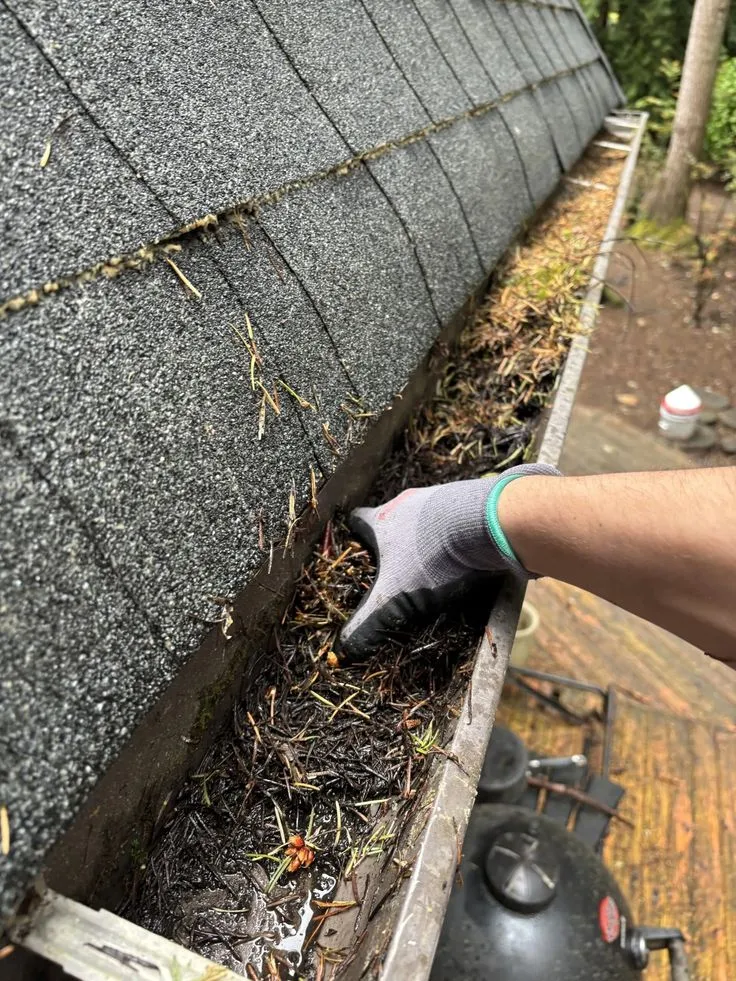
When this material becomes wet, it may remain in place and form a denser layer. Water then has less exposed surface through which to enter the gutter.
Regular gutter guards cleaning can address that buildup before it becomes a larger restriction. However, the work should focus on affected areas rather than assume that every section requires the same treatment.
The Guard Type Determines the Maintenance Method
Before cleaning begins, identify the protection installed on your home. Different products have different access requirements and approved maintenance methods.
Mesh and Micro-Mesh Guards
These use screened surfaces to limit debris entering the gutter. Deposits may collect on top or around joints. Cleaning should avoid damaging the mesh or changing its position.
Perforated Covers
These typically exclude larger debris while allowing water through openings. Smaller particles may still enter, so the gutter underneath may occasionally need attention.
Reverse-Curve Systems
These guide water around an edge into the channel. Surface condition, positioning, and concentrated runoff can influence performance. Follow the installer’s maintenance guidance.
Brush and Foam Inserts
Material can collect around or within the inserts. Access and cleaning depend on the particular product.
For every design, gutter guards cleaning should preserve the components that control water entry.
Signs Your Protected Gutters Need Attention
You do not need to wait until a gutter is visibly packed with debris before arranging an assessment.
Look for changes in how the system behaves:
- Water flowing over the front edge.
- Overflow recurring at the same corner.
- Little downspout discharge during substantial rainfall.
- Visible plants or debris at exposed openings.
- Sagging sections or displaced covers.
- New erosion beneath the roofline.
These observations do not confirm a blockage by themselves. Water can also escape because of alignment, capacity, or roof-edge problems.
The purpose of gutter guards cleaning is to address maintenance-related restrictions. If cleaning does not change the drainage pattern, further investigation may be necessary.
Why Are Gutters Clogged Despite Gutter Guards?
Finding gutters clogged despite gutter guards does not always mean the entire system needs replacement.
Small material may have passed through openings, or debris may have entered around a loose section. An obstruction could also have existed before the guards were installed.
Another possibility is a blocked downspout. Even when the upper channel remains relatively clean, a restriction farther down can cause water to back up.
Our article on Signs of a Clogged Downspout explains the clues that may point toward this problem.
A thorough gutter guards cleaning assessment should consider these possibilities before recommending removal, replacement, or repeated surface cleaning.
How to Clean Gutters With Gutter Guards
The safest answer to how to clean gutters with gutter guards begins with the product instructions. Do not assume that a technique suitable for an open gutter is appropriate for a fitted cover.
Start With an Inspection
Identify visible damage, loose attachments, and areas where debris is concentrated. Confirm the guard type and whether the manufacturer permits removal.
Clear Suitable Surface Deposits
Use an approved tool and method that will not distort the guard. Avoid pushing debris through openings or forcing it toward an outlet.
Assess the Channel Beneath
Internal access may be needed when there is evidence of trapped material or restricted flow. It is not automatically necessary during every appointment.
Check the Drainage Route
Where appropriate, check that water can travel through the outlet and downspout. A restricted underground connection may require a separate specialist.
Restore Any Accessed Components
Removed sections must be correctly repositioned and secured. Effective gutter guards cleaning should leave the protection functioning as intended.
Should You Clean the Guards Yourself?
Some light maintenance may be possible from the ground using suitable tools, provided the manufacturer permits the method. However, ground-based tools do not always show what is happening beneath the cover.
Leave difficult access, unfamiliar attachments, and upper-story work to an appropriate professional. Do not climb onto wet roofing or use a ladder during rainfall.
Avoid high-pressure washing unless the product manufacturer specifically approves the technique. Excessive force may damage components or disturb their placement.
Professional gutter guards cleaning becomes especially useful when the work requires internal access or when overflow continues despite removing visible surface debris.
How Often to Clean Gutters With Guards
There is no single cleaning interval suitable for every protected gutter system.
When deciding how often to clean gutters with guards, consider tree coverage, seasonal debris, guard design, and previous drainage problems.
A home beneath mature trees may need closer monitoring than a property with an open roofline. Pine needles and seeds can also create different maintenance needs from broad autumn leaves.
Begin with manufacturer guidance and inspect seasonally, with additional checks after storms that deposit substantial debris.
Our Best Time to Clean Gutters guide can help Fairfield County homeowners organize seasonal maintenance.
Schedule gutter guards cleaning when inspection identifies a need, rather than treating every check as a requirement for full cleaning.
Cleaning or Repairs: Which Does Your Home Need?
Removing debris cannot correct every drainage problem.
If overflow continues after the channel and outlets are cleared, the system may have an incorrect slope, loose supports, insufficient capacity, or poorly positioned components.
Water running behind a gutter may involve roof-edge details. Pooling near the house can also relate to the discharge route or surrounding ground.
Before arranging another gutter guards cleaning appointment, explain what happened after the previous visit. Did the overflow improve? Does it occur during ordinary rain or only intense downpours?
That information helps determine whether maintenance, gutter repairs, or a broader drainage assessment is the appropriate next step.
What Should Professional Gutter Guard Cleaning Include?
Professional gutter guard cleaning should begin with a clear explanation of the proposed work.
Ask whether the estimate includes surface debris removal, access beneath removable guards, downspout checks, and reattachment of accessed components. Explain the brand and installation details if you know them.
The provider should also identify visible concerns that cleaning cannot resolve. Guard replacement, roofing repairs, and underground drainage work may fall outside the cleaning scope.
Clearline’s Gutter Cleaning in Fairfield County CT is the appropriate service to discuss when requesting maintenance. Confirm how your particular protection system affects access, pricing, and the work included.
Keep Your Protected Gutters Working Properly
Gutter guards can reduce maintenance, but good drainage still depends on clear water-entry points, suitable alignment, and functioning outlets.
A property-specific gutter guards cleaning plan helps you address buildup while recognizing when a repair or specialist assessment is needed.
For coordinated property care, explore Clearline’s Exterior Cleaning in Fairfield County CT services, including gutter, window, screen, and exterior washing options.
Call (203) 340-1123 or request a free quote to discuss your gutter system and the maintenance suitable for your home. or find Clearline Window Cleaning on Google Maps to schedule your gutter cleaning service.
Frequently Asked Questions
Do Guards Make Gutter Cleaning Unnecessary?
Some products significantly reduce internal debris, but maintenance requirements vary. Check the manufacturer’s instructions and warranty instead of assuming every system eliminates cleaning.
Can Leaves on Top Cause Overflow?
Yes, a dense layer can restrict water entry. However, scattered leaves do not automatically indicate a blockage. Observe drainage and assess the amount and location of buildup.
Do the Guards Always Need Removing?
No. Surface cleaning may be sufficient when the channel and outlets remain clear. Removal should depend on the product design and evidence that internal access is necessary.
Can Cleaning Damage a Guard System?
Incorrect tools, excessive force, or improper removal can damage components. Following approved maintenance methods helps preserve the system’s condition and positioning.
Why Does Overflow Return After Cleaning?
The cause may involve slope, capacity, installation, or a restriction farther downstream. Repeated overflow should be assessed rather than automatically treated as new surface debris.
Will Maintenance Affect the Warranty?
Warranty conditions vary. Check approved cleaning methods and contact the installer before removing or modifying components covered by a service agreement.
Is Inspection Needed Before Winter?
Checking after substantial leaf fall is sensible, particularly where debris collects heavily. Address identified restrictions before freezing conditions, following the product’s care guidance.