


A renovation may be finished, but the property rarely feels complete while the glass is still covered with dust, adhesive, paint specks, and construction residue. Post-construction window cleaning is the final step that turns a work zone into a clean, finished home. It requires more than spraying the glass and wiping it with a cloth. Construction materials can cling tightly to windows, and the wrong tool may scratch the surface, damage coatings, or push debris into tracks and seals.
The safest approach is to identify the residue first, remove loose particles without rubbing them across the glass, and use a method suited to the window type. This protects the glass while creating the clear, polished finish homeowners expect after construction or remodeling.
Why Windows Look Dirty After Construction
Even when windows are covered during a project, fine particles can travel throughout the property. Drywall sanding, wood cutting, painting, masonry work, and flooring installation all release material that settles on glass, frames, tracks, and screens.
Common forms of construction dust on windows include:
- Drywall and joint-compound powder
- Sawdust and wood fibers
- Cement or masonry residue
- Paint mist and small splatters
- Caulk and silicone marks
- Adhesive from labels and protective film
- Grout or tile dust
- Dirt trapped in tracks and sills
These materials do not behave like everyday household dust. Some are abrasive, while others harden as they dry. That is why post-construction window cleaning should begin with an inspection and controlled removal instead of aggressive wiping.
The Main Risk: Dragging Debris Across the Glass
One of the most damaging window cleaning mistakes is wiping dusty glass before loose debris has been removed. When a cloth or squeegee drags them across the pane, they may leave fine scratches.
A safer process begins by lifting loose particles with soft brushes, controlled vacuuming, or other glass-safe tools. This step is especially important during renovation window cleaning, because several trades may have left different materials on the same pane.
What looks like ordinary dust may contain sharp particles from drilling, cutting, or masonry work. Pressing harder does not make removal safer; it can make the damage worse.
Paint, Adhesive, and Caulk Need Different Treatments
Not every construction mark should be treated the same way. Paint splatter, label adhesive, silicone, and dried compounds respond differently to moisture and cleaning products.
Water-based paint may soften with the correct solution, while cured sealant can require a more specialized approach. Sticker residue may spread if rubbed too early. Dried caulk often sits close to the frame, where careless scraping can damage both the glass and the surrounding finish.
Professional Post-Construction Window Cleaning matches the removal method to the material. Before working across a full pane, the cleaner should test a small area and confirm that the chosen product is safe for the glass, coating, and frame.
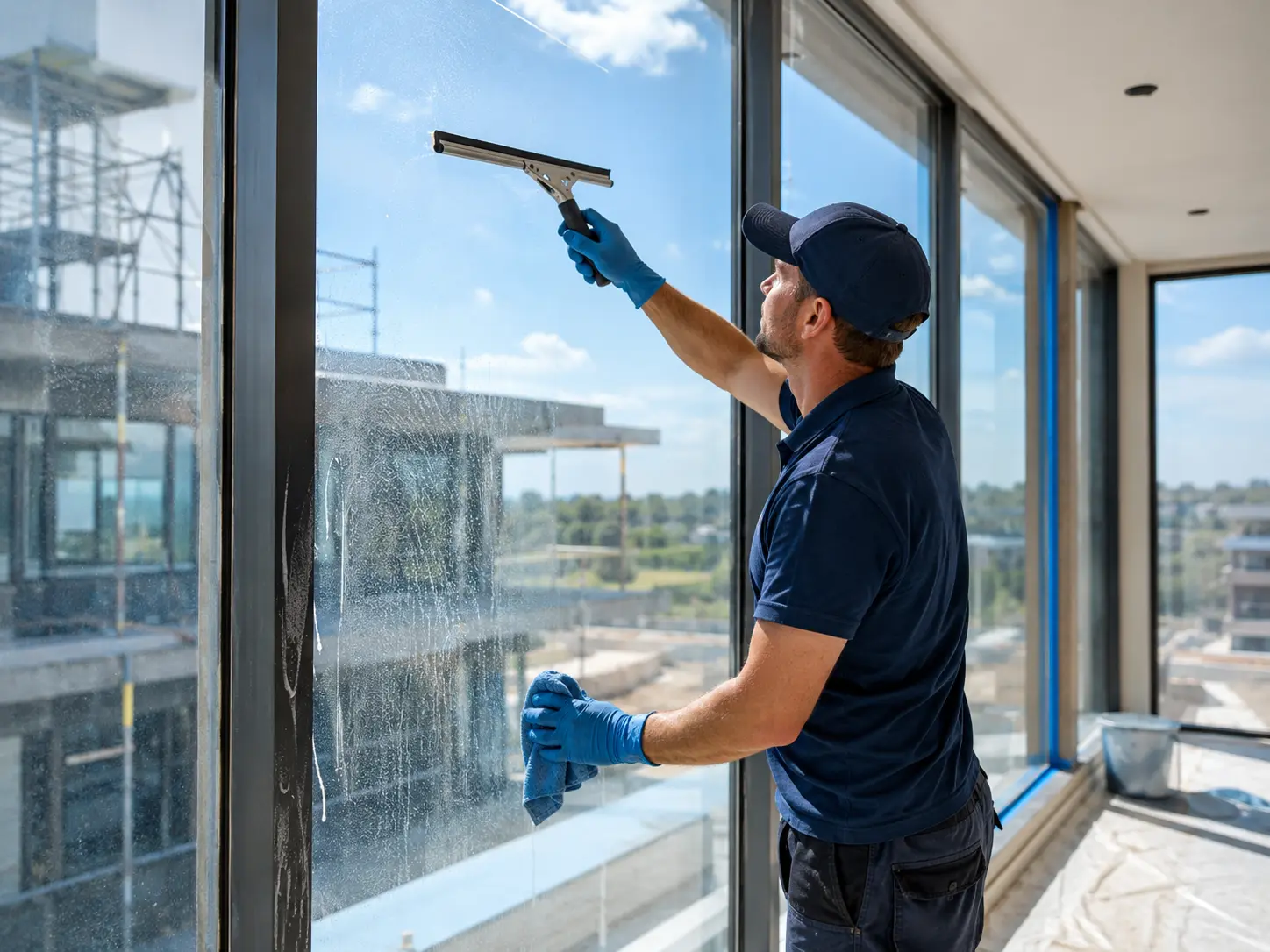
Why Scrapers Must Be Used Carefully
A scraper is sometimes useful for removing bonded residue, but it is not a universal solution. Not every type of glass is suitable for scraping, and debris trapped beneath a blade can create long scratches.
Incorrect scraping may:
- Damage to coated or tempered glass
- Scratch the surface
- Affect decorative films
- Chip edges near the frame
- Spread adhesive
- Mark painted finishes
This is one reason builder window cleaning should involve a careful assessment. The cleaner must understand the glass type, the residue, and the manufacturer’s limitations before using mechanical removal methods.
A Safer Cleaning Sequence
A structured process reduces the risk of moving dirt from one area to another. While each property is different, post-construction window cleaning normally includes the following stages.
1. Inspect the Entire Window
The glass, frames, screens, tracks, hardware, and seals are checked before cleaning begins. Existing scratches, chips, failed seals, and damaged coatings should be identified early.
2. Remove Loose Debris
Dry particles are lifted carefully rather than rubbed into the pane. Tracks and sills are addressed so dust does not blow back onto the cleaned glass.
3. Test the Products
A small test area helps confirm that the chosen method will not affect tint, coatings, paint, or frame finishes.
4. Treat Each Residue Separately
Paint, adhesive, silicone, and masonry marks may require different products or tools. One strong chemical should not be used on every stain.
5. Wash and Detail the Glass
After heavy residue is removed, the glass is washed, squeegeed, and detailed around the edges.
6. Recheck the Result in Natural Light
Different angles of daylight can reveal haze, smears, or remaining marks that were not visible during the first pass.
This step-by-step approach separates detailed post-construction window cleaning from routine maintenance cleaning.
Why Both Sides of the Glass Matter
Construction residue does not remain only on the side nearest the project. Open windows, ventilation, and air movement can carry fine dust indoors and outdoors. A complete result may require cleaning both sides of your windows.
Interior surfaces collect drywall dust, fingerprints, tape residue, and paint mist. Exterior panes may hold masonry dust, soil, overspray, and runoff from other work.
Skipping one side can leave the glass looking cloudy even after visible residue is removed. Professional post-construction window cleaning should assess both surfaces before deciding what the job requires.
Tracks, Frames, and Sills Should Not Be Ignored
Construction debris frequently collects around the pane. Tracks can fill with sawdust, plaster powder, small screws, and pieces of protective film. Sills may hold paint chips, adhesive, and dirt carried through the property. After construction cleanup, some windows may also show mineral deposits or hard water stains on windows caused by water exposure, runoff, or previous cleaning attempts.
Ignoring these areas may cause:
- Dirt to return when the window opens
- Hardware is becoming difficult to operate
- Moisture combines with dust and forms hardened buildup
- Debris to interfere with seals or drainage openings
- Screens become dirty again after installation
A complete post-construction window cleaning service should consider the full window system rather than only the center of the glass.
When DIY Cleaning May Be Suitable
Light surface dust on an accessible window may be manageable for a homeowner. DIY cleaning is safest when the residue is loose and can be removed without blades, ladders, heavy pressure, or unidentified chemicals.
Professional support is the better choice when:
- Paint or silicone is bonded to the glass
- Windows are high or difficult to reach
- The glass has a tint or special coatings
- There is extensive masonry or drywall residue
- Scraping appears necessary
- Labels have remained on the glass for a long time
- The residue cannot be identified
Calling residential window cleaning professionals can reduce the risk of permanent scratching and save the time involved in treating each pane separately.
How Builders Benefit from Professional Cleaning
The windows affect the final impression of an entire project. A remodeled kitchen, new addition, or freshly painted room can still feel unfinished when the glass is hazy.
Professional builder window cleaning supports:
- Final property presentation
- Client walkthroughs
- Punch-list completion
- Real estate photography
- Model home preparation
- Move-in readiness
It also creates a clear distinction between general cleanup and detailed glass care. Construction crews may remove surface dirt, but window specialists are trained to identify the risks associated with glass, frames, coatings, and bonded residue.
When Should the Service Be Scheduled?
The best time for post-construction window cleaning is usually after major dust-producing work has ended but before the final property presentation or move-in.
Before the cleaning team arrives:
- Finish sanding and painting
- Remove tools and building materials near windows
- Provide clear access to interior glass
- Mention any tint, coating, or specialty glass
- Identify known scratches or damaged seals
- Keep other trades away from finished windows
Scheduling too early may lead to fresh dust settling on newly cleaned panes. Timing the service correctly helps protect the result.
Professional Window Cleaning in Fairfield County
Clearline Window Cleaning provides window cleaning Fairfield County, CT, homeowners, builders, and property managers who can rely on it after remodeling, renovation, or new construction.
Working with experienced residential window cleaning professionals is particularly valuable for tall glass, French panes, specialty windows, and extensive construction buildup. The service can include detailed glass cleaning, frames, tracks, sills, and cleaning both sides of your windows when needed.
Frequently Asked Questions
Can Construction Dust Scratch Window Glass?
Yes. Construction dust may contain sand, cement, metal, or masonry particles. Rubbing these materials across dry glass can leave fine scratches.
Can Dried Paint Be Removed Safely?
Often, yes, but the correct method depends on the paint, glass type, and any coatings present. Aggressive scraping should be avoided until the surface is assessed.
Is Post-Construction Cleaning Different From Regular Window Cleaning?
Yes. It often involves bonded residue, detailed inspection, and specialized removal techniques that are not required during routine maintenance.
Does the Service Include Tracks and Frames?
The scope varies, so homeowners should confirm whether tracks, frames, sills, screens, and adhesive removal are included.
How Long Does the Service Take?
Timing depends on the number of windows, access, residue type, and level of buildup. Divided panes and heavily affected tracks may require additional time.
Give the Finished Property the Clear Look It Deserves
Dust, paint, adhesive, and debris can hide the quality of a completed construction project. Removing them incorrectly can also create permanent damage that is more noticeable than the original residue.
Clearline Window Cleaning offers professional post-construction window cleaning for homes and properties across Fairfield County. Whether you have completed a single-room remodel or a larger building project, the team can inspect the glass and recommend a safe, detailed cleaning approach.
Contact Clearline Window Cleaning today to request a quote and give your newly built or renovated property a bright, polished, move-in-ready finish.