


Salt residue on windows in Darien CT can make otherwise clean glass look cloudy, dull, or permanently marked. The problem often appears as pale streaks, rough spots, or a thin film that returns soon after ordinary cleaning. In many cases, the issue is not simple dirt. Moisture, wind, airborne particles, and repeated drying can leave deposits that bond to the surface and become harder to remove over time.
For homeowners, the real question is not only how to clean the glass. It is also how to identify the source, prevent the buildup from returning, and avoid damaging the window during treatment. The right solution depends on whether the marks are fresh surface residue, heavier mineral deposits on glass, or signs of long-term etching.
What Does Salt Residue Look Like?
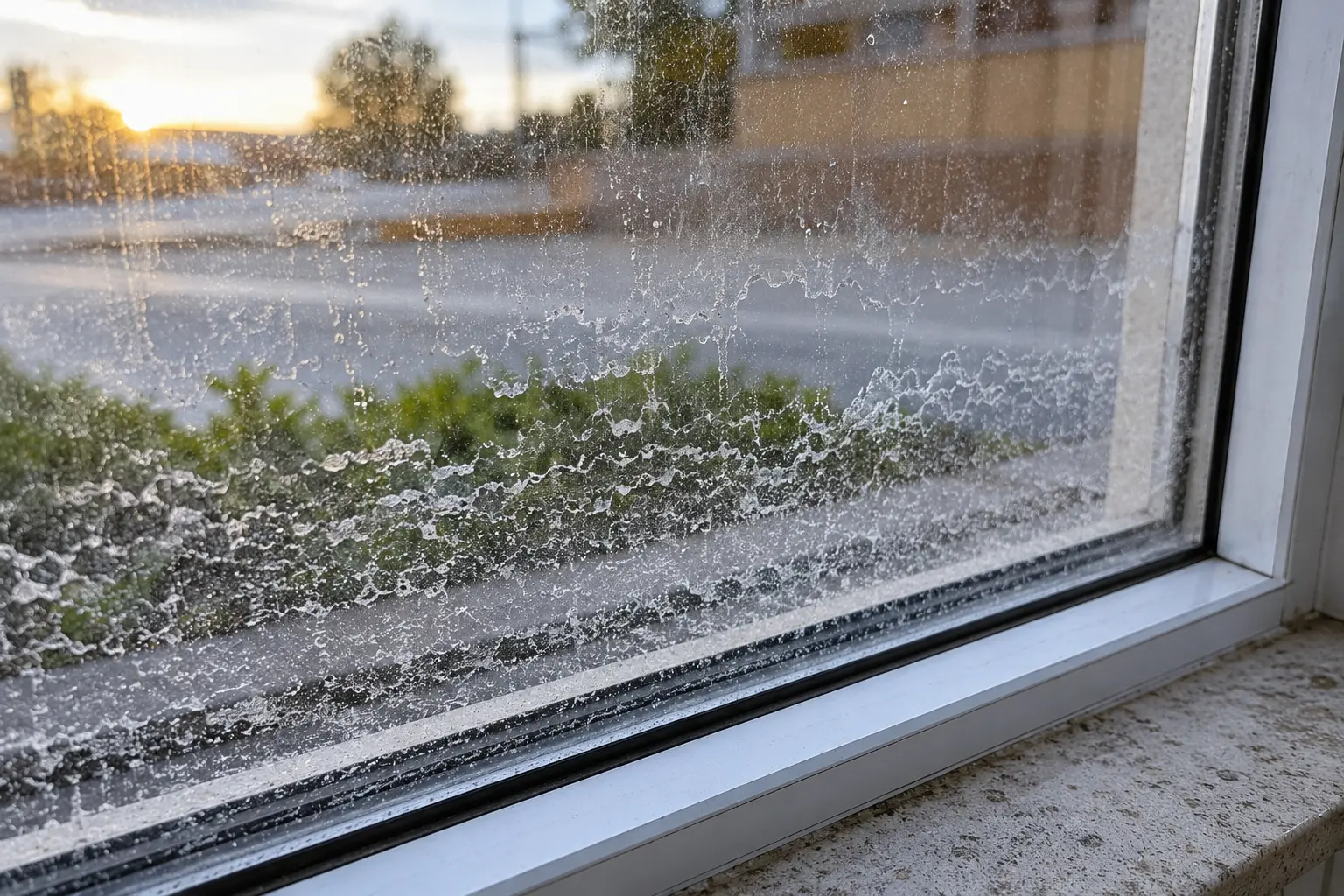
Salt-related buildup does not always look the same. One window may have a light haze, while another may show white rings around dried droplets. Lower panes may develop streaks where water repeatedly runs down the glass.
Common signs include:
- White or gray spots that remain after wiping.
- Cloudy areas that become obvious in direct sunlight.
- Rough patches that can be felt with a fingertip.
- Streaks near the lower edge of the pane.
- A dull finish that reduces natural light.
- Marks that return shortly after cleaning.
Salt residue on windows in Darien CT can also be confused with soap film, pollen, oxidation, or hard water deposits. That is why homeowners should identify the material on the glass before choosing a cleaner.
Why Do These Deposits Build Up?
Moisture carries tiny particles onto exterior glass. When the water evaporates, those particles remain. Repeated cycles of moisture and drying gradually increase the amount of residue left behind.
The buildup may become more noticeable when windows are exposed to:
- Wind-driven moisture.
- Rain followed by rapid drying.
- Sprinkler overspray.
- Water running from masonry or metal.
- Road dust and airborne particles.
- Improper rinsing after exterior washing.
- Long gaps between professional cleanings.
Salt stains on exterior glass can also trap pollen, dust, and grime. Once that happens, the window may look dirty again quickly, even after a basic wipe.
Moisture exposure does not need to be dramatic to cause visible marks. Small amounts of water reaching the same section of glass repeatedly can create layers that become increasingly noticeable in sunlight.
Salt Residue on Windows in Darien CT Can Affect More Than Appearance
At first, the buildup may seem cosmetic. The windows lose brightness, exterior views become less clear, and the property can look poorly maintained. However, long-term residue may create a more serious concern.
Some deposits become increasingly difficult to remove because they remain in contact with the glass for months. If homeowners scrub too aggressively, they may scratch the pane or damage its coating. If the residue remains untouched, the surface may become etched or permanently cloudy.
The risk is higher when:
- The marks have been present for a long time.
- The same area is repeatedly exposed to moisture.
- Strong chemicals have already been used.
- Abrasive tools have touched the surface.
- The window has a special finish or coating.
- Frames and seals also show signs of residue.
Salt residue onwindows in Darien CT should therefore be treated as a maintenance issue, not only an appearance problem. Early attention may improve the chance of restoring clarity before the deposits become deeply established.
Why Ordinary Glass Cleaner May Not Work
Standard glass cleaner is useful for fingerprints, light dust, and some forms of surface grime. It may not dissolve deposits that have dried repeatedly and bonded to the glass.
The pane may look better while it is wet, then reveal the same cloudy film after drying. This usually means the cleaning process removed loose dirt but left the underlying residue in place.
Cleaning hot glass in direct sunlight can make the situation worse. The product dries too quickly, leaves streaks, and makes it difficult to separate cleaning marks from the original buildup.
Repeatedly adding more glass cleaner may also create a second layer of residue. The result can be a mixture of mineral marks, salt film, and dried cleaning products.
Mistakes That Can Worsen Glass Stains
Trying to force the marks off may cause permanent damage. Some mistakes that can worsen glass stains include:
- Using rough scouring pads.
- Scraping without checking the type of glass.
- Applying concentrated acids without testing.
- Mixing household cleaning chemicals.
- Scrubbing dry glass.
- Using excessive pressure around seals.
- Allow the cleaning solution to dry on the pane.
- Repeating an ineffective method several times.
Salt residue on Windows in Darien CT requires controlled cleaning rather than aggressive cleaning. More force does not always produce clearer glass.
A safer approach begins with a small test area. This shows whether the deposit responds to treatment and whether the chosen product affects the glass, frame, coating, or nearby exterior surfaces.
Homeowners should also remember that a cleaning technique that works on one pane may not be appropriate for every window in the property.
How Professional Cleaning Handles the Problem
Professional exterior window cleaning begins with an inspection. A technician considers where the stains appear, how they react to moisture, whether the surface feels rough, and whether the marks sit on the glass or inside the window unit.
A professional process may include:
- Removing loose dust and debris.
- Checking for scratches, failed seals, or coating damage.
- Testing a suitable solution on a small section.
- Treating the residue with controlled contact time.
- Using glass-safe tools to loosen the buildup.
- Rinse the surface thoroughly.
- Inspecting the pane from several angles.
- Repeating treatment only where necessary.
The purpose of professional exterior window cleaning is not to use the strongest chemical available. It is to select the safest, most effective method for the specific condition of the glass.
This measured process can also help prevent unnecessary contact with window frames, seals, painted surfaces, and surrounding landscaping.
When Minerals Are Part of the Problem
Not every white mark comes from salt alone. Water may collect minerals from irrigation systems, concrete, stone, metal, or other exterior surfaces before reaching the window.
Once the water dries, it can leave mineral deposits on glass along with environmental residue. This mixed buildup may appear thicker and more uneven than an ordinary salt film. It can also resist household glass cleaner more strongly.
Salt residue on windows in Darien CT may therefore require more than one treatment approach. A technician may need to distinguish among salt, calcium, magnesium, oxidation, soap film, and other contaminants before choosing the correct process.
Treating every white mark as the same type of stain may lead to disappointing results or unnecessary damage.
Can Every Stained Window Be Restored?
Many light and moderate deposits can be improved, especially when treated early. However, no responsible window cleaning company should promise that every pane will return to perfect condition.
If deposits have etched the surface, some cloudy areas may remain even after cleaning. Scratches caused by previous cleaning attempts may also become more visible once the surface residue has been removed.
The likely result depends on:
- The age of the buildup.
- The type and condition of the glass.
- Previous cleaning methods.
- The depth of the staining.
- The presence of coatings.
- Continued exposure to moisture.
An honest inspection helps homeowners understand whether the goal should be complete removal, noticeable improvement, or prevention of further damage.
How to Reduce Future Salt Buildup
Removing the visible stains is only part of the solution. If the source of moisture continues, the residue may return.
Homeowners can reduce future salt residue on Windows in Darien CT by:
- Redirecting sprinkler heads away from windows.
- Checking gutters and downspouts for overflow.
- Rinse the glass after nearby exterior work.
- Avoid cleaning in strong direct sunlight.
- Inspecting exterior windows after storms.
- Cleaning frames, sills, and screens regularly.
- Scheduling maintenance before the buildup becomes heavy.
- Preventing water from repeatedly drying on the same pane.
Routine maintenance is usually easier and safer than waiting for thick deposits to form. It also allows technicians to identify developing problems before they affect a larger portion of the glass.
Why Local Window Care Makes a Difference
Exterior glass conditions vary from one property to another. Some homes are more exposed to wind and moisture, while others collect residue from landscaping, traffic, irrigation, or nearby building materials.
Choosing window cleaning in Darien, CT allows homeowners to request an assessment based on the actual condition of their property. The service can address the glass while also checking screens, frames, tracks, and sills for related buildup.
When comparing providers for exterior window cleaning Darien CT homeowners should look for a company that inspects the glass before selecting a treatment. The company should also explain realistic outcomes instead of promising that every type of staining will disappear completely.
Salt residue on windows in Darien CT is easier to manage when the cleaning plan considers both the visible stains and the source that caused them.
Restore a Clearer View with Clearline Window Cleaning
Salt residue on windows in Darien CT can slowly turn clear glass into a dull, marked surface that ordinary cleaning does not fix. Early treatment can make removal easier, protect the appearance of the property, and reduce the temptation to use harsh DIY methods.
Clearline Window Cleaning provides professional exterior window cleaning for homeowners dealing with stubborn residue, environmental buildup, difficult access, and detailed glass care. Our team can inspect the affected windows, explain the likely cause, and recommend an appropriate cleaning approach.
Contact Clearline Window Cleaning today to request a quote for window cleaning in Darien, CT, and restore a cleaner, brighter view without risking unnecessary damage to your glass.
Frequently Asked Questions
Can vinegar remove salt residue from windows?
Vinegar may help with very light surface film, but it may not remove older or mixed deposits. Test any product on a small area and avoid combining vinegar with other chemicals.
Why do the stains return after cleaning?
The residue may not have been fully removed, or the window may still be exposed to the same moisture source. Sprinkler spray, runoff, and repeated damp conditions can cause the marks to return.
Is the cloudy appearance always removable?
No. Surface residue can often be improved, but etched glass, damaged coatings, scratched panes, or failed seals may not respond to ordinary cleaning.
How often should exterior windows be cleaned?
The right schedule depends on exposure. Windows affected by moisture, landscaping, road dust, or repeated buildup may require more frequent care than protected windows.
Should I scrape white spots from the glass?
Not without confirming that the glass and its coating are suitable. Incorrect scraping can create scratches that remain visible after the original residue is removed.