

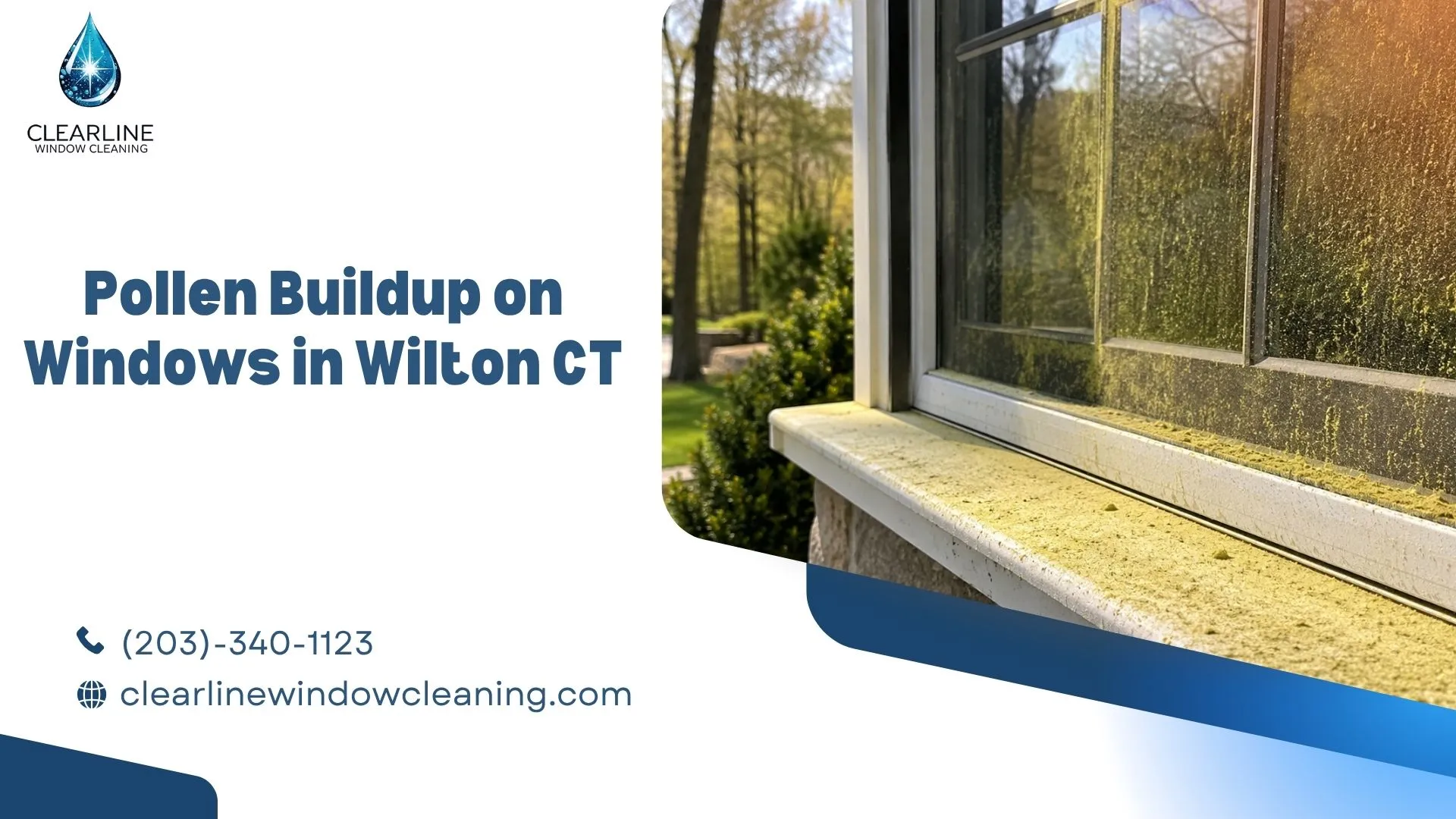
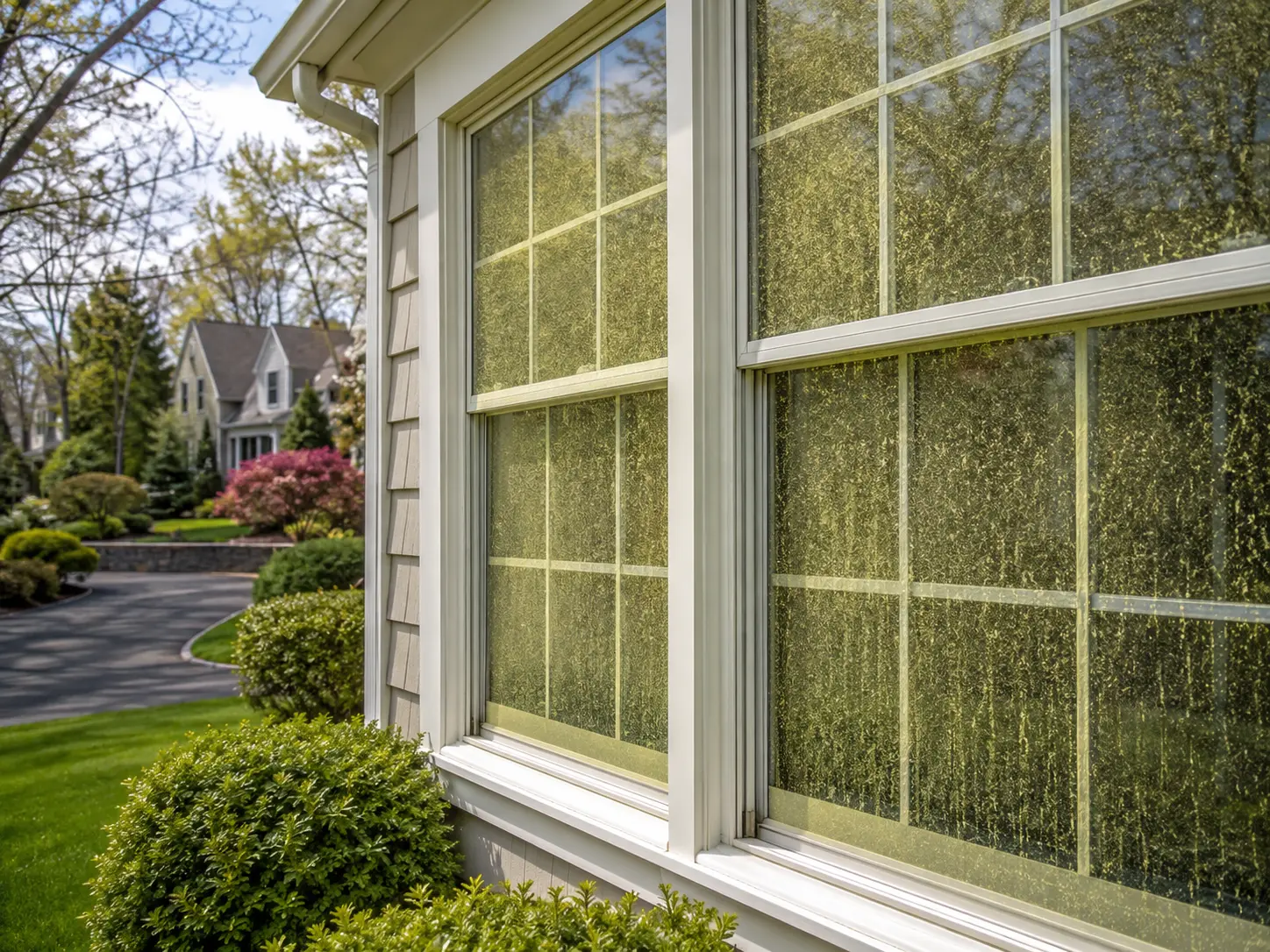
Pollen buildup on windows in Wilton CT can turn clear glass into a yellow, cloudy surface in a matter of days. Fine particles settle on exterior panes, become trapped inside screens, and collect around frames and sills. When rain or morning moisture mixes with that dust, it can leave sticky streaks that ordinary wiping does not fully remove.
For homeowners addressing pollen buildup on Windows in Wilton CT, early is the best way to stop a light seasonal film from becoming stubborn residue. The correct approach is to remove loose particles first, clean screens separately, wash the glass with suitable tools, and prevent dirty water from moving back across the pane.
Why Wilton Windows Collect So Much Pollen
Wilton’s wooded neighborhoods and landscaped properties create attractive surroundings, but trees, flowering plants, and changing winds also increase the amount of pollen in the air. Exterior windows facing gardens, tree lines, or open areas may collect more residue than protected panes.
Pollen buildup on windows in Wilton CT, often becomes most visible after light rain. Dry particles may appear dusty, but moisture turns them into yellow streaks that cling to the glass. Open windows can also allow pollen to move through dirty screens and settle on interior sills, tracks, and nearby furniture.
Homes with large picture windows, sunrooms, French panes, or many screened openings may need more frequent attention during the heaviest part of the season.
The Screen May Be Making the Glass Look Dirtier
A homeowner may clean the glass and still see a dull or yellow appearance. In many cases, the screen is a window screen cleaning Wilton CT, holding most of the debris.
Screens act as filters. They trap pollen, dust, small insects, and plant material before those particles enter the home. However, moisture passing through a dirty screen can carry residue back onto recently cleaned glass.
That is why window screen cleaning Wilton CT should be treated as part of the window-care process rather than an occasional extra. Washing the pane but leaving the screen untouched often produces a short-lived result.
A proper screen-cleaning process should remove loose debris, wash the mesh gently, rinse away residue, and allow the screen to dry completely before it is reinstalled.
How to Identify Where the Haze Is Coming From
Before reaching for a cleaner, inspect the window from both sides.
Remove or raise the screen when it is safe to do so. Wipe a small corner of the exterior glass with a clean, damp microfiber cloth. If that section becomes clearer, the residue is likely on the exterior surface. If the haze remains, check the interior side.
If the glass looks clear when the screen is removed, the screen may be responsible for most of the dull appearance. This quick test helps determine whether the window needs screen care, interior cleaning, or exterior window cleaning.
It can also reveal whether pollen is mixed with another substance, such as tree sap, mineral residue, road grime, or bird droppings.
Mistakes When Removing Pollen from Glass
Some cleaning methods spread pollen instead of removing it. The most common mistakes when removing pollen from glass include the following.
Wiping the Pane While It Is Dry
Dry wiping can drag pollen, dust, and small particles across the glass. If grit is present, the movement may leave fine scratches.
Spraying Cleaner onto Heavy Buildup
Liquid can turn loose pollen into a sticky paste. The mixture then collects along the edges, corners, frames, and sills.
Using One Cloth for Every Surface
A cloth used on a dirty screen should not be used on the glass. It can transfer trapped grime directly back onto the pane.
Cleaning in Direct Sunlight
Strong sunlight causes the cleaning solution to dry too quickly, leaving streaks and making it difficult to judge the result.
Ignoring Frames and Sills
Pollen left around the window can wash back onto the glass during the next rain. A complete service should address the surrounding areas as well.
Managing pollen buildup on windows in Wilton CT requires a careful sequence, not harder scrubbing.
The Best Order for Cleaning Pollen-Affected Windows
For light to moderate buildup, the order of work should be:
- Remove loose pollen with a soft brush or low-suction vacuum.
- Take out the screen when practical.
- Clean the screen separately.
- Wipe the frame, track, and sill.
- Wash the exterior glass with clean water and a glass-safe solution.
- Use a clean squeegee or microfiber cloth to reduce streaking.
- Check the corners and lower edge for remaining residue.
- Allow the screen to dry before reinstalling it.
Following this order prevents debris from one component from contaminating another. It also makes it easier to identify stains that are not caused by pollen.
Why Professional Screen Cleaning Can Make a Difference
Window screens can be damaged by excessive water pressure, rough brushes, or incorrect handling. Older mesh may stretch, and frames can bend if they are removed carelessly.
Professional window screen cleaning is particularly useful when a home has many screens, fragile materials, difficult access, or heavy seasonal buildup. A trained technician can remove debris without forcing it deeper into the mesh.
Professional care also allows the screens, frames, glass, and sills to be treated as one system. This usually provides a more consistent result than cleaning each component at a different time.
For homes that repeatedly experience Pollen Buildup on windows in Wilton CT, clean screens may help the glass remain clearer for longer.
Create a Seasonal Window Maintenance Plan
One spring cleaning may not be enough for every property. Effective seasonal window maintenance should reflect the home’s tree coverage, wind exposure, screen use, and the homeowner’s expectations.
A practical plan may include:
- An inspection before the pollen season becomes heavy.
- A mid-season screen and exterior-glass cleaning.
- A follow-up after the main pollen period.
- A fall cleaning to remove leaves, dust, and insect debris.
- Spot cleaning after storms or landscaping work.
For properties with recurring pollen buildup on windows in Wilton CT, the goal is not constant cleaning. It is preventing several layers of residue from collecting and becoming more difficult to remove.
Regular seasonal window maintenance can reveal damaged screens, clogged tracks, failed seals, or moisture problems before they become larger concerns. Including window track cleaning in your maintenance routine also helps remove trapped pollen, dust, and debris that could spread back onto the glass and surrounding areas.
When Exterior Window Cleaning Is the Safer Option
Ground-level panes with light residue may be manageable for some homeowners. Elevated windows, skylights, large glass sections, and panes above sloped ground create a different level of risk.
Professional exterior window cleaning is also helpful when pollen is mixed with tree sap, mineral deposits, or dried organic residue. These contaminants do not always respond to the same products.
A technician can assess the condition of the glass, select a suitable method, and clean hard-to-reach areas without relying on harsh chemicals or unsafe ladder use.
This becomes especially valuable when pollen buildup on windows in Wilton CT affects several sides of the home or returns quickly after basic household cleaning.
How to Keep Windows Cleaner Between Services
Homeowners cannot eliminate outdoor pollen, but they can reduce how quickly it builds up.
Keep shrubs and branches trimmed away from the glass. Check that sprinklers do not spray directly onto windows. Dust interior sills and tracks regularly, and avoid reinstalling damp screens.
After windy days or landscaping work, inspect the most exposed panes. Light residue is easier to remove before rain turns it into streaks. Using separate, clean tools for screens, frames, and glass also prevents cross-contamination.
These habits can slow recurring pollen buildup on windows in Wilton CT, and make professional appointments more effective.
Why Local Window Care Matters
Window size, design, tree coverage, and access conditions vary from one Wilton property to another. Some homes include traditional divided panes, while others have large modern windows, sunrooms, skylights, or multi-story glass.
Choosing window cleaning in Wilton, CT allows the service to be adapted to the actual property. A technician can identify which elevations receive the heaviest exposure, which screens require deeper treatment, and which windows need special access equipment.
When comparing window screen cleaning Wilton CT, services, homeowners should ask whether the company also addresses the frames, sills, and glass. Treating all these areas together is more likely to produce a cleaner, longer-lasting result.
Enjoy a Brighter View with Clearline Window Cleaning
Pollen buildup on windows in Wilton, CT can reduce natural light, dull outdoor views, and make a well-maintained home look less polished. The answer is not aggressive scrubbing; it is coordinated care for the glass, screens, frames, and sills.
Clearline Window Cleaning provides professional window screen cleaning, detailed glass care, and reliable exterior window cleaning for Wilton homeowners. Our team can remove seasonal buildup from accessible and hard-to-reach windows while helping you choose a practical maintenance schedule.
Contact Clearline Window Cleaning today to request a quote. Let us clear away the pollen so your home feels brighter, your screens look cleaner, and every window gives you a clearer view of the season.
Frequently Asked Questions
Can Rain Wash Pollen off Windows?
Rain may remove some loose particles, but it often leaves streaks when the water dries. If pollen is trapped in the screen, rain can carry more residue onto the pane.
Should Screens Be Cleaned Every Time the Windows Are Cleaned?
Not always, but they should be inspected. During heavy pollen periods, cleaning the screens and glass together can help prevent rapid recontamination.
Can Pollen Scratch Glass?
Pollen itself is usually fine, but it may be mixed with dust, sand, or grit. Wiping the pane while dry can drag those particles across the surface.
Why Do Windows Still Look Yellow After Cleaning?
The residue may remain inside the screen, around the frame, or on the opposite side of the glass. It may also be mixed with sap or mineral buildup.
How Often Should Windows Be Cleaned During Pollen Season?
The right frequency depends on exposure, nearby trees, wind, and screen use. Heavily exposed windows may require more attention than protected panes.