

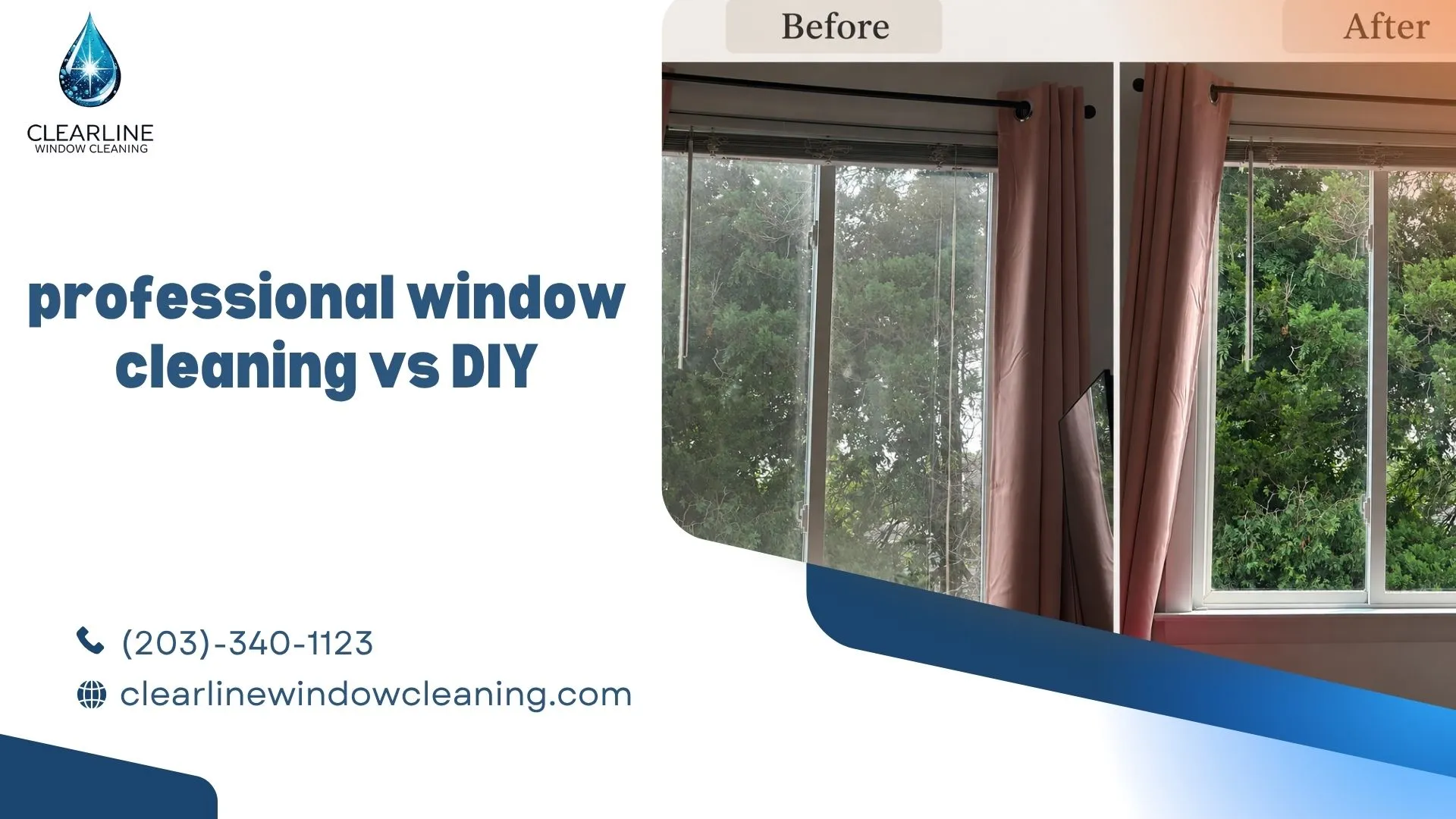
Choosing professional window cleaning vs DIY comes down to three questions: Can you reach the glass safely? What will the job really cost in money and time? And what level of finish do you expect?
For a few accessible windows with light fingerprints or dust, cleaning them yourself can be practical. For upper-story glass, difficult access, or a whole house that needs detailed attention, hiring a qualified cleaner may be the better choice. This guide compares both approaches so you can decide what makes sense for your windows and your budget.
Professional Window Cleaning vs DIY at a Glance
The best approach to home window cleaning depends on the scope of the job. A quick interior touch-up is a different task from cleaning both sides of every window, removing screens, and detailing the surrounding surfaces.
| Factor | Cleaning it yourself | Hiring a professional |
| Upfront spending | Supplies and any tools you need to buy | A quote based on the agreed work |
| Your time | Preparation, cleaning, drying, and cleanup | Arranging access and reviewing the completed work |
| Access | Best suited to glass you can reach safely | Access method should be assessed for the property |
| Finish | Depends on technique, tools, and patience | Can offer a more consistent finish across many panes |
| Screens and tracks | Extra tasks to include in your plan | Confirm whether these are included or priced separately |
| Stubborn marks | May be unsuitable for ordinary products | May require assessment or a separate treatment |
Neither option should be judged on the glass alone. Compare the same number of windows, the same surfaces, and the same level of detail.
Cost: Compare the Whole Job, Not Just the Supplies
In a professional window cleaning vs DIY comparison, buying a bottle of cleaner is only part of the cost. The useful question is how much you will spend to complete the exact work you want done.
What you pay when you clean the windows yourself
DIY window cleaning can have a low cash cost if you already own suitable supplies and every pane is easy to reach. Possible purchases include a squeegee, soft washer, microfiber cloths, bucket, and a product approved for your windows.
Count replacement supplies and cleanup materials, too. Equipment you will reuse should be considered differently from consumables you replace each time. Avoid buying access equipment before deciding whether the work is appropriate to tackle yourself.
What affects a professional quote?
Ask how the company counts windows or panes and what the price covers. Factors to clarify include:
- Interior glass, exterior glass, or both.
- Window size, divided panes, and removable components.
- Height and access restrictions.
- Screens, tracks, frames, and sills.
- Heavy buildup or marks that need separate treatment.
A glass-only quote and a detailed whole-window quote are not equivalent. Request the scope in writing before comparing prices.
A simple way to value your time
Use this planning calculation:
Personal project cost = supplies purchased for the job + consumables + hours spent × the value you assign to an hour.
For illustration only, $40 in supplies plus four hours valued at $25 per hour equals $140 in personal project cost. The cash spending is still $40; the remaining $100 represents your time. These are hypothetical figures, not Clearline pricing or a local market average.
Compare your own estimate with an actual quote for the same scope. This makes the decision more useful than relying on a generic price range.
Time: Include Preparation and the Second Pass
Time often changes the professional window cleaning vs DIY decision. Washing one accessible pane may feel quick, but a full job also involves moving items, protecting surfaces, handling screens, changing dirty cloths, and checking for missed edges.
Before committing to a whole house, time yourself on one representative, safely accessible window. Include preparation and cleanup. Use that result as a rough starting point, allowing extra time for different sizes and designs.
If you hire help, ask about expected duration and any preparation you need to complete. Your schedule still matters, even when you are not doing the washing.
Safety: Let Access Set the Limit
The most important part of professional window cleaning vs DIY is deciding whether you can do the work without unsafe access. Saving money does not make an awkward upper-floor window an appropriate weekend project.
Common DIY window cleaning risks include falls, overreaching, handling heavy removable parts, and damaging glass with unsuitable tools. Keep homeowner maintenance to surfaces you can reach from a stable, safe position. Do not lean out of windows or climb onto roofs to reach exterior glass.
Good window cleaning safety starts before the first pane: inspect the work area, follow the window manufacturer’s care instructions, and stop if access or the condition of the glass is uncertain. Hiring someone also requires judgment; ask about their access plan, experience with your window type, and insurance.
For a broader discussion of access hazards, read our article on the hidden dangers of DIY gutter and window cleaning.
Results: What Makes the Finish Different?
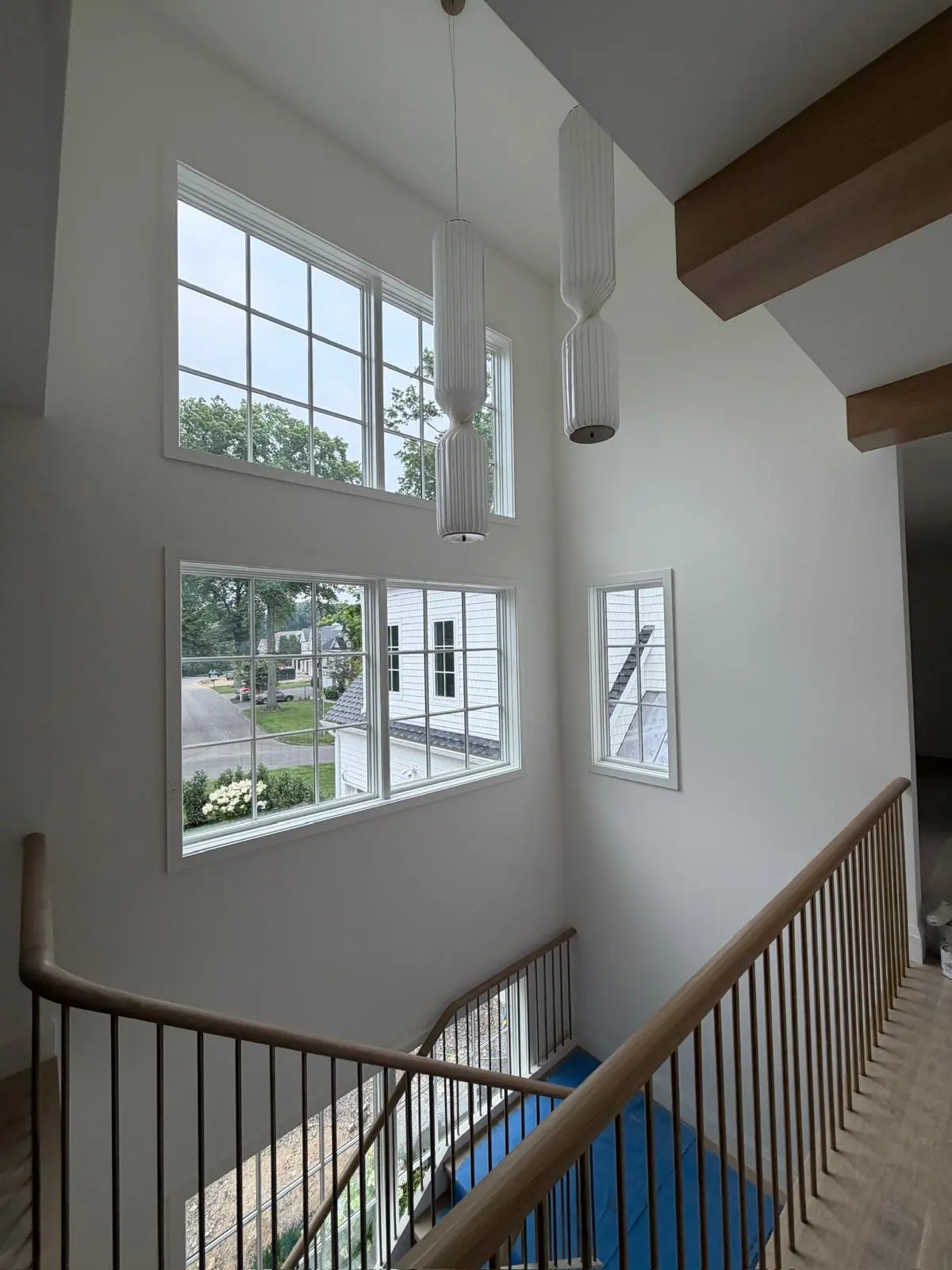
When evaluating professional window cleaning vs DIY, look at the entire finished window. A clear center with dirty edges, dusty screens, or debris in the lower track can still look unfinished.
Streaks and residue
Dirty cloths, remaining cleaning solution, and missed water along the edges can undermine the finish. Careful technique can produce good results on accessible glass, while an experienced cleaner may provide more consistency across a larger job.
Always use methods suitable for the specific glass and frame. Andersen, for example, warns against abrasive cleaners on glass in its glass-care guidance. Check your own manufacturer’s instructions before trying a stronger product or tool.
Screens, tracks, and sills
These areas affect how complete the job looks, but they are not automatically included in every service. Identify which need attention and agree on the scope beforehand. Our guide to cleaning window tracks, frames, and sills explains why glass cleaning alone leaves part of the job unfinished.
Marks that cleaning may not solve
Do not assume every cloudy patch is surface dirt. Persistent marks deserve assessment before repeated scrubbing or stronger products. Ask what can reasonably be removed and whether specialist treatment or a window repair assessment is needed. A cleaning quote should not be treated as a promise to correct every existing defect.
Choose the Right Level of Help for Your Windows
The right professional window cleaning vs DIY decision balances cost, safe access, time, and your expectations for the finish. Handle manageable touch-ups yourself and seek help when the scope or access exceeds what you can comfortably complete.
Want to compare your plan with a professional option? Explore Clearline’s window cleaning service and request a quote for your windows. Specify whether you want interior glass, exterior glass, screens, or tracks so you can compare the same scope.
Frequently Asked Questions
Is professional window cleaning worth the cost?
It can be, especially when the job includes many panes, difficult access, or more detail than you have time to complete. Assess professional window cleaning vs DIY using an actual quote, the same cleaning scope, and a realistic estimate of your own time.
Is cleaning windows yourself always cheaper?
It may require less cash when you already own supplies and can reach every surface safely. Buying equipment, repeating sections, and spending a full day on the work can change the overall value. Compare both the cash expense and the time commitment.
What are the biggest DIY window cleaning risks?
Unsafe access, overreaching, and unsuitable cleaning tools are key concerns. Window cleaning safety should take priority over completing every pane in one session. Leave a window unfinished if reaching or cleaning it would require an unsafe approach.
Do professional cleaners include screens and tracks?
Not automatically. Ask whether the quote includes screens, detailed track cleaning, frames, and sills, or whether those items are separate. A clear checklist makes it easier to compare options and review the finished job.
Can I handle touch-ups between professional visits?
Yes, provided the glass is safely accessible and you follow its care instructions. Light touch-ups can be part of home window cleaning without turning every maintenance task into a full-house project.