

A downspout is probably clogged if water spills over the gutter, collects near the foundation, drains slowly, or comes out through gutter joints instead of the bottom outlet. These warning signs should not be ignored. A blocked downspout prevents rainwater from moving safely away from the roof, which can eventually damage siding, landscaping, foundations, basements, and exterior walls.
Many homeowners focus on the visible leaves inside the gutter but overlook the vertical downspout. The gutter may appear relatively clean while compacted leaves, roof granules, twigs, seed pods, or mud remain trapped deeper inside the drainage system. Recognizing the signs of a clogged downspout early can help you solve the problem before the next heavy storm creates expensive water damage.
Why a Clogged Downspout Is More Serious Than It Looks
A gutter system is designed to collect rainwater from the roof and direct it into the downspouts. The downspouts then carry that water away from the home. When one part of this route becomes blocked, water must find another path.
It may overflow over the edge, leak through seams, run behind the gutter, or pool near the base of the house. Over time, this can lead to rotting fascia boards, peeling paint, washed-out landscaping, basement moisture, foundation problems, and mold growth.
The blockage does not always happen suddenly. Debris may build up slowly until the downspout can no longer handle the amount of water flowing from the roof. This is why the importance of regular gutter maintenance becomes most obvious during periods of heavy rain.
The following warning signs can help you identify a developing problem before serious damage occurs.
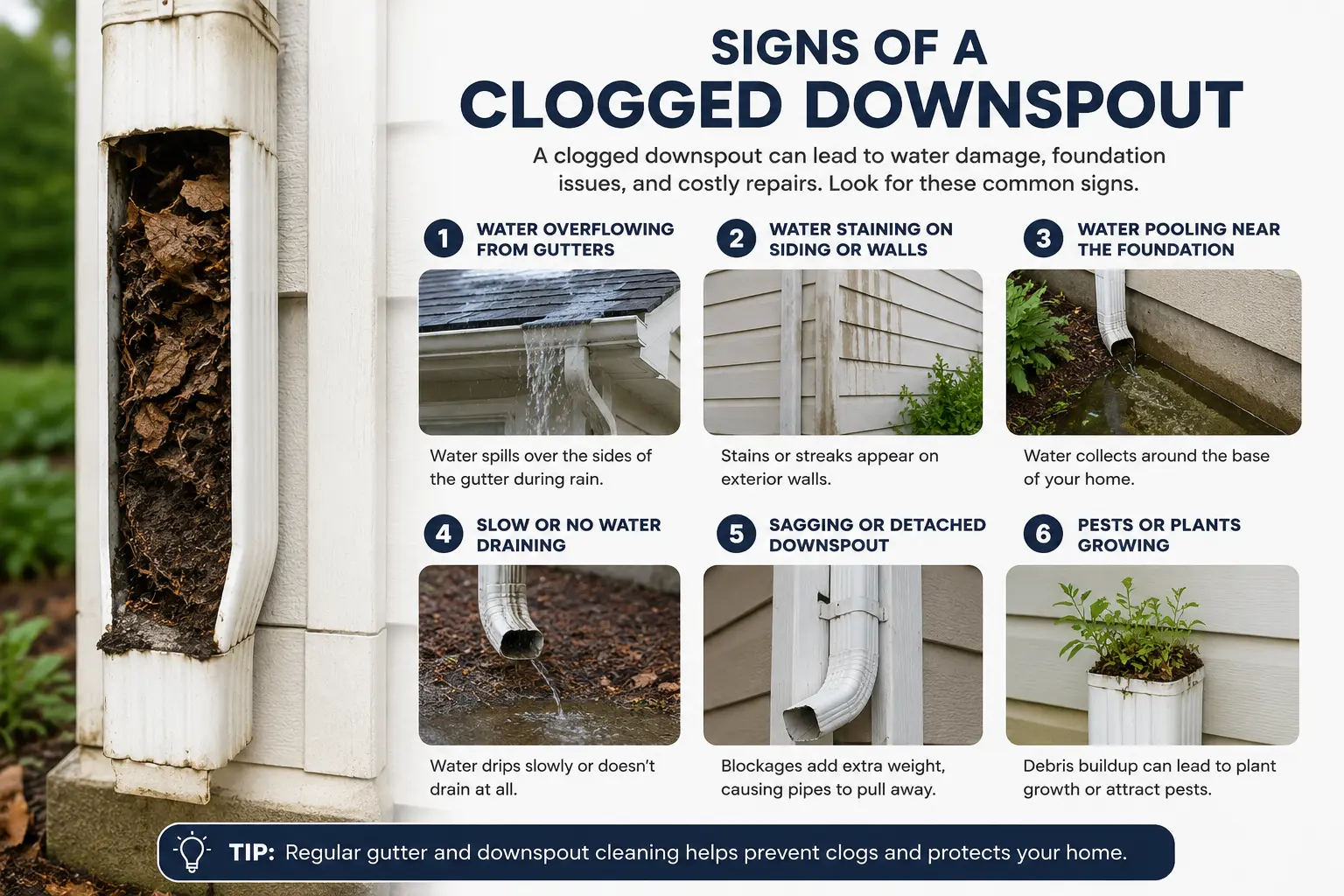
1. Water Is Pouring Over the Edge of the Gutter
One of the clearest signs of a clogged downspout is water spilling over the gutter during rainfall. A small amount of overflow during an unusually intense storm may not always indicate a blockage. However, repeated overflow from the same section usually means water is not moving through the downspout properly.
When the outlet is blocked, rainwater begins filling the gutter like a container. Once it reaches the top, it flows over the edge and lands near the exterior walls or foundation.
This overflow can :
- Damage flower beds and landscaping
- Create muddy areas around the home
- Stain siding and exterior surfaces
- Saturate the soil near the foundation
- Cause water to enter basements or crawl spaces
- Damage the fascia boards behind the gutter
A downspout overflowing during normal rainfall should be inspected as soon as possible. The problem may be at the gutter outlet, inside an elbow, or farther down the vertical pipe.
2. Little or No Water Comes Out of the Downspout
During steady rain, water should flow visibly from the bottom of an open downspout. If the gutters are collecting water but almost nothing comes out, the drainage path may be blocked.
This is especially noticeable when one downspout is working correctly while another remains dry. The difference suggests that leaves or compacted debris are preventing water from traveling through the pipe.
The clog may be caused by:
- Wet leaves are compressed inside the downspout
- Twigs caught in an elbow
- Roof granules mixed with dirt
- Pine needles forming a dense blockage
- Seed pods or small branches
- Animal nesting material
- Debris trapped near the outlet opening
One of the most important signs of a clogged downspout is a lack of water discharge during rain. Ignoring this condition allows water to remain inside the gutter, where it adds weight and puts pressure on fasteners and seams.
3. Water Collects Around the Foundation
Water pooling near the bottom of a downspout may indicate that the pipe is blocked, damaged, disconnected, or unable to direct water far enough away from the property.
A downspout should move water away from the foundation rather than releasing it directly against the home. If the upper section is clogged, water may leak through joints or escape from a loose connection before reaching the intended outlet.
Foundation pooling is one of the more serious gutter drainage problems because saturated soil can place pressure on foundation walls. It may also contribute to basement leaks, crawl-space moisture, mold growth, or erosion around the property.
Check the area after rainfall. Warning signs include:
- Standing water near the foundation
- Soil erosion below the gutter
- Damp basement walls
- Water marks on the exterior foundation
- Mulch or soil is being washed away
- Moss or algae growing near the downspout
These symptoms do not always come from the downspout alone, but the drainage system should be inspected as part of the diagnosis.
4. The Gutters Sag or Pull Away from the Roofline
A clogged downspout can cause water to remain trapped inside the gutter. Water is heavy, and the additional weight becomes even greater when mixed with wet leaves, mud, and organic debris.
Over time, the gutter may begin to sag, bend, or pull away from the fascia board. Fasteners can loosen, seams may separate, and the gutter slope can change. Once this happens, even removing the blockage may not fully restore proper drainage without additional repairs.
Sagging is one of the signs of a clogged downspout that homeowners may notice even when it is not raining. Look along the roofline from a distance and check for sections that appear lower than the rest.
Other warning signs include:
- Gaps between the gutter and fascia
- Loose brackets or fasteners
- Water remains inside the gutter after dry weather
- Sections that tilt in the wrong direction
- Leaks are forming around gutter seams
A sagging system should be inspected carefully because using a ladder near a damaged gutter can be unsafe.
5. Water Leaks from Gutter Seams and Downspout Joints
Rainwater should enter the gutter, move toward the outlet, pass through the downspout, and leave through the bottom. When the drainage path is blocked, water may begin escaping through weak points.
Leaks can appear around:
- Gutter seams
- End caps
- Downspout elbows
- Connecting joints
- Fastener holes
- Cracks in older sections
A leaking joint does not necessarily mean that the joint itself is the original problem. Water pressure from a blocked downspout may expose a weak connection that did not leak under normal conditions.
If you seal the joint without removing the obstruction, the water may simply find another escape point. The entire drainage route should be checked before making surface repairs.
These leaks can stain exterior walls and allow moisture to reach wood trim, siding, windows, and entry areas. Addressing the blockage first is essential for a lasting solution.
6. You Hear Dripping or Gurgling Inside the Downspout
Not every clog completely stops the water. A partial obstruction may allow a small amount of drainage while producing unusual sounds.
Gurgling, slow dripping, splashing, or water backing up inside the pipe may indicate that the downspout is struggling to handle the flow. These sounds are often easier to hear shortly after the rain begins or after the storm has stopped.
A partial blockage can be deceptive because some water still exits the pipe. However, the restricted flow may not be enough during heavy rainfall. The result can be a downspout overflowing only during stronger storms.
This is why homeowners should not rely only on whether water is coming out. The speed and volume of the flow also matter. If the discharge appears weak compared with the amount of rain falling on the roof, the system may require cleaning.
7. Plants, Moss, or Weeds Are Growing in the Gutter
Visible plant growth is one of the most obvious signs of a clogged downspout and a neglected gutter system. When leaves and dirt remain trapped for long periods, they create a damp environment where seeds can take root.
Moss, weeds, and small plants indicate that the gutter contains enough organic material and moisture to support growth. This buildup can move toward the outlet and form a dense obstruction inside the downspout.
Plant growth also suggests that water is not draining or drying properly. In addition to blocking the system, roots may enter seams, separate components, or trap more debris.
Removing the visible plant alone is not enough. The gutter channel, outlet, elbows, and downspout should be cleared and checked for additional material.
Why Downspouts Become Clogged
Downspout clogs often begin inside the gutter. Leaves, roof granules, twigs, and dirt move with rainwater toward the outlet. Larger debris becomes caught near the opening, while smaller material travels into bends and elbows.
Common causes include:
- Overhanging trees
- Heavy leaf fall
- Pine needles
- Damaged or missing gutter guards
- Incorrect gutter slope
- Narrow downspout openings
- Roof shingle granules
- Bird or animal nests
- Lack of seasonal cleaning
Homes surrounded by mature trees may require more frequent attention. Debris can accumulate at different times of the year, especially during autumn, spring pollen season, storms, and periods of strong wind.
For properties surrounded by mature trees, scheduling fall gutter cleaning in Ridgefield CT can remove heavy leaf buildup before it reaches the outlets and creates downspout blockages.
Can You Clear a Blocked Downspout Yourself?
Some minor obstructions near the bottom opening may be easy to remove from ground level. However, attempting to access roof gutters or upper-story downspouts can be dangerous without the correct equipment and experience.
Homeowners should also avoid forcing sharp tools into the downspout. This may separate joints, dent the pipe, or push the clog deeper into the system.
Professional cleaning may be the safer choice when:
- The blockage is inside the upper elbow
- The gutter is above the first story
- Water is leaking behind the gutter
- The system is sagging or loose
- Several downspouts are affected
- The clog returns quickly
- There are signs of foundation or fascia damage
A professional can remove the debris, flush the drainage route, check the outlet, and identify whether the problem involves the gutter slope, connections, or downspout placement.
The Importance of Regular Gutter Maintenance
Regular residential gutter cleaning can prevent many drainage problems before they become visible. Waiting until a downspout is completely blocked allows water and compacted debris to place unnecessary pressure on the entire gutter system.
Regular maintenance helps:
- Keep gutters and downspouts flowing
- Reduce overflow during storms
- Protect fascia boards and siding
- Prevent water from collecting near the foundation
- Identify loose brackets and leaking seams
- Remove organic debris before it becomes compacted
- Extend the useful life of the gutter system
The right cleaning schedule depends on the number of surrounding trees, the roof design, local weather, and whether the property has gutter guards. Some homes may need service more than once a year, particularly after autumn leaf fall or severe storms.
Do Not Wait for the Next Heavy Storm
The most important signs of a clogged downspout often appear during rain, but the damage may continue long after the weather clears. Wet fascia boards, saturated soil, and water trapped inside the gutter can create problems gradually.
If you notice overflow, weak drainage, standing water, leaking joints, sagging gutters, or unusual sounds, the system should be checked before the next storm.
Early cleaning is usually simpler and less expensive than repairing water-damaged siding, landscaping, foundations, or interior spaces.
Protect Your Home with Clearline Window Cleaning
A blocked downspout is more than a minor inconvenience. It can redirect large amounts of rainwater toward the roofline, siding, landscaping, and foundation. Recognizing the warning signs early allows you to restore proper drainage before expensive damage develops.
Clearline Window Cleaning provides professional gutter cleaning Fairfield County CT services for homeowners who need reliable debris removal, downspout clearing, gutter inspection, and safer seasonal maintenance.
Do not wait until the next storm reveals a serious drainage problem. Contact Clearline Window Cleaning today to request a quote and help keep your gutters and downspouts working as they should.
Frequently Asked Questions
How can I tell whether the gutter or downspout is clogged?
If water collects in the gutter and does not exit from the bottom of the downspout, the obstruction is likely near the outlet, inside an elbow, or farther down the pipe. A professional inspection can identify the exact location.
Why does my downspout overflow only during heavy rain?
A partial blockage may allow light rainfall to pass but restrict the higher volume produced by a strong storm. The gutter may also be improperly pitched or too small for the roof area.
Can gutter guards prevent every downspout clog?
No. Gutter guards may reduce large debris, but smaller material, such as pine needles, seeds, roof granules, and dirt, can still enter the system. Guards also require periodic inspection and cleaning.
Can clogged downspouts cause basement leaks?
Yes. When water is released or collected close to the foundation, it may enter through cracks, joints, or porous materials and contribute to basement moisture.
How often should gutters and downspouts be cleaned?
Many properties benefit from cleaning at least once or twice a year, but homes surrounded by trees may require more frequent service. Inspections after heavy storms can also help identify new blockages.